
ATLANTIS
THE ANTEDILUVIAN WORLD
by Ignatius Donnelly
[1882]
PART I
THE HISTORY OF ATLANTIS
CHAPTER I
THE PURPOSE OF THE BOOK.
THIS book is an attempt to demonstrate several distinct and novel propositions.
These are:
1. That there once existed in the Atlantic Ocean, opposite the mouth of the
Mediterranean Sea, a large island, which was the remnant of an Atlantic continent,
and known to the ancient world as Atlantis.
2. That the description of this island given by Plato is not, as has been long
supposed, fable, but veritable history.
3. That Atlantis was the region where man first rose from a state of barbarism
to civilization.
4. That it became, in the course of ages, a populous and mighty nation, from
whose overflowings the shores of the Gulf of Mexico, the Mississippi River, the
Amazon, the Pacific coast of South America, the Mediterranean, the west coast
of Europe and Africa, the Baltic, the Black Sea, and the Caspian were populated
by civilized nations.
5. That it was the true Antediluvian world; the Garden of Eden; the Gardens
of the Hesperides; the Elysian Fields; the Gardens of Alcinous; the Mesomphalos;
the Olympos; the Asgard of the traditions of the ancient nations; representing
a universal memory of a great land, where early mankind dwelt for ages in peace
and happiness.
6. That the gods and goddesses of the ancient Greeks, the Phnicians, the Hindoos,
and the Scandinavians were simply the kings, queens, and heroes of Atlantis; and
the acts attributed to them in mythology are a confused recollection of real historical
events.
7. That the mythology of Egypt and Peru represented the original religion of
Atlantis, which was sun-worship.
8. That the oldest colony formed by the Atlanteans was probably in Egypt, whose
civilization was a reproduction of that of the Atlantic island.
9. That the implements of the “Bronze Age” of Europe were derived from Atlantis.
The Atlanteans were also the first manufacturers of iron.
10. That the Phnician alphabet, parent of all the European alphabets, was
derived from au Atlantis alphabet, which was also conveyed from Atlantis to the
Mayas of Central America.
11. That Atlantis was the original seat of the Aryan or Indo-European family
of nations, as well as of the Semitic peoples, and possibly also of the Turanian
races.
12. That Atlantis perished in a terrible convulsion of nature, in which the
whole island sunk into the ocean, with nearly all its inhabitants.
13. That a few persons escaped in ships and on rafts, and, carried to the nations
east and west the tidings of the appalling catastrophe, which has survived to
our own time in the Flood and Deluge legends of the different nations of the old
and new worlds.
If these propositions can be proved, they will solve many problems which now
perplex mankind; they will confirm in many respects the statements in the opening
chapters of Genesis; they will widen the area of human history; they will explain
the remarkable resemblances which exist between the ancient civilizations found
upon the opposite shores of the Atlantic Ocean, in the old and new worlds; and
they will aid us to rehabilitate the fathers of our civilization, our blood, and
our fundamental ideas-the men who lived, loved, and labored ages before the Aryans
descended upon India, or the Phnician had settled in Syria, or the Goth had reached
the shores of the Baltic.
The fact that the story of Atlantis was for thousands of years regarded as
a fable proves nothing. There is an unbelief which grows out of ignorance, as
well as a scepticism which is born of intelligence. The people nearest to the
past are not always those who are best informed concerning the past.
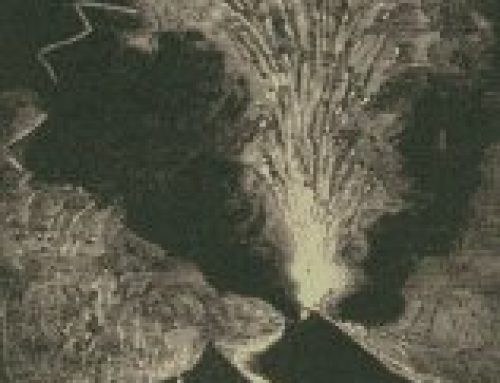
For a thousand years it was believed that the legends of the buried cities
of Pompeii and Herculaneum were myths: they were spoken of as “the fabulous cities.”
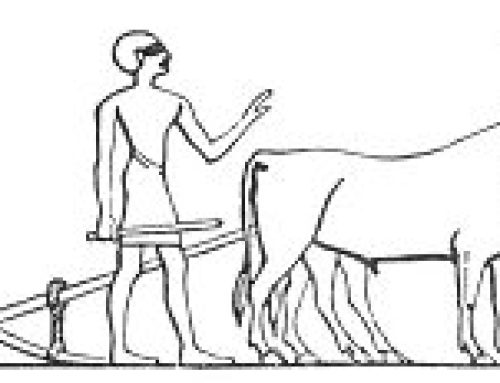
For a thousand years the educated world did not credit the accounts given by Herodotus
of the wonders of the ancient civilizations of the Nile and of Chaldea. He was
called “the father of liars.” Even Plutarch sneered at him. Now, in the language
of Frederick Schlegel, “the deeper and more comprehensive the researches of the
moderns have been, the more their regard and esteem for Herodotus has increased.”
Buckle says, “His minute information about Egypt and Asia Minor is admitted by
all geographers.”
There was a time when the expedition sent out by Pharaoh Necho to circumnavigate
Africa was doubted, because the explorers stated that after they had progressed
a certain distance the sun was north of them; this circumstance, which then aroused
suspicion, now proves to us that the Egyptian navigators had really passed the
equator, and anticipated by 2100 years Vasquez de Gama in his discovery of the
Cape of Good Hope.
If I succeed in demonstrating the truth of the somewhat startling propositions
with which I commenced this chapter, it will only be by bringing to bear upon
the question of Atlantis a thousand converging lines of light from a multitude
of researches made by scholars in different fields of modern thought. Further
investigations and discoveries will, I trust, confirm the correctness of the conclusions
at which I have arrived.

Leave A Comment