
ATLANTIS
THE ANTEDILUVIAN WORLD
by Ignatius Donnelly
[1882]
PART I
THE HISTORY OF ATLANTIS
CHAPTER III
THE PROBABILITIES OF PLATO’S STORY.
THERE is nothing improbable in this narrative, so far as it describes a great,
rich, cultured, and educated people. Almost every part of Plato’s story can be
paralleled by descriptions of the people of Egypt or Peru; in fact, in some respects
Plato’s account of Atlantis falls short of Herodotus’s description of the grandeur
of Egypt, or Prescott’s picture of the wealth and civilization of Peru. For instance,
Prescott, in his “Conquest of Peru” (vol. i., p. 95), says:
“The most renowned of the Peruvian temples, the pride of the capital and the
wonder of the empire, was at Cuzco, where, under the munificence of successive
sovereigns, it had become so enriched that it received the name of Coricancha,
or ‘the Place of Gold.’ . . . The interior of the temple was literally a mine
of gold. On the western wall was emblazoned a representation of the Deity, consisting
of a human countenance looking forth from amid innumerable rays of light, which
emanated from it in every direction, in the same manner as the sun is often personified
with us. The figure was engraved on a massive plate of gold, of enormous dimensions,
thickly powdered with emeralds and precious stones. . . . The walls and ceilings
were everywhere incrusted with golden ornaments; every part of the interior of
the temple glowed with burnished plates and studs of the precious metal; the cornices
were of the same material.”
There are in Plato’s narrative no marvels; no myths; no tales of gods, gorgons,
hobgoblins, or giants. It is a plain and reasonable history of a people who built
temples, ships, and canals; who lived by agriculture and commerce: who, in pursuit
of trade, reached out to all the countries around them. The early history of most
nations begins with gods and demons, while here we have nothing of the kind; we
see an immigrant enter the country, marry one of the native women, and settle
down; in time a great nation grows up around him. It reminds one of the information
given by the Egyptian priests to Herodotus. “During the space of eleven thousand
three hundred and forty years they assert,” says Herodotus, “that no divinity
has appeared in human shape, . . . they absolutely denied the possibility of a
human being’s descent from a god.” If Plato had sought to draw from his imagination
a wonderful and pleasing story, we should not have had so plain and reasonable
a narrative. He would have given us a history like the legends of Greek mythology,
full of the adventures of gods and goddesses, nymphs, fauns, and satyrs.
Neither is there any evidence on the face of this history that Plato sought
to convey in it a moral or political lesson, in the guise of a fable, as did Bacon
in the “New Atlantis,” and More in the “Kingdom of Nowhere.” There is no ideal
republic delineated here. It is a straightforward, reasonable history of a people
ruled over by their kings, living and progressing as other nations have lived
and progressed since their day.
Plato says that in Atlantis there was “a great and wonderful empire,” which
“aggressed wantonly against the whole of Europe and Asia,” thus testifying to
the extent of its dominion. It not only subjugated Africa as far as Egypt, and
Europe as far as Italy, but it ruled “as well over parts of the continent,”
to wit, “the opposite continent” of America, “which surrounded the true ocean.”
Those parts of America over which it ruled were, as we will show hereafter, Central
America, Peru, and the Valley of the Mississippi, occupied by the “Mound Builders.”
Moreover, be tells us that “this vast power was gathered into one;” that is
to say, from Egypt to Peru it was one consolidated empire. We will see hereafter
that the legends of the Hindoos as to Deva Nahusha distinctly refer to this vast
empire, which covered the whole of the known world.
Another corroboration of the truth of Plato’s narrative is found in the fact
that upon the Azores black lava rocks, and rocks red and white in color, are now
found. He says they built with white, red, and black stone. Sir C. Wyville Thomson
describes a narrow neck of land between Fayal and Monte da Guia, called “Monte
Queimada” (the burnt mountain), as follows: “It is formed partly of stratified
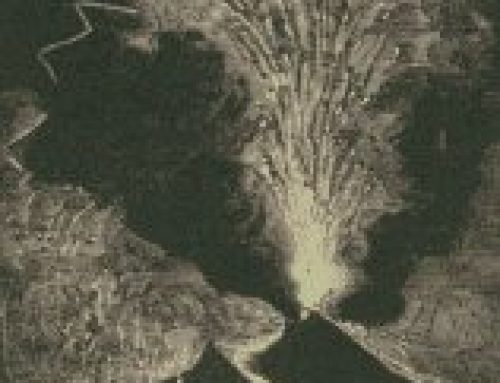
tufa of a dark chocolate color, and partly of lumps of black lava, porous,
and each with a large cavity in the centre, which must have been ejected as volcanic
bombs in a glorious display of fireworks at some period beyond the records of
Acorean history, but late in the geological annals of the island” (“Voyage of
the Challenger,” vol. ii., p. 24). He also describes immense walls of black volcanic
rock in the island.
The plain of Atlantis, Plato tells us, “had been cultivated during many ages
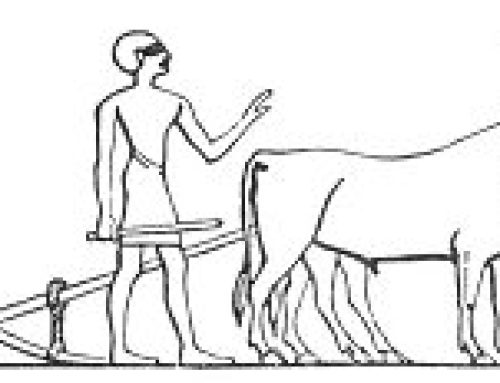
by many generations of kings.” If, as we believe, agriculture, the domestication
of the horse, ox, sheep, goat, and bog, and the discovery or development of wheat,
oats, rye, and barley originated in this region, then this language of Plato in
reference to “the many ages, and the successive generations of kings,” accords
with the great periods of time which were necessary to bring man from a savage
to a civilized condition.
In the great ditch surrounding the whole land like a circle, and into which
streams flowed down from the mountains, we probably see the original of the four
rivers of Paradise, and the emblem of the cross surrounded by a circle, which,
as we will show hereafter, was, from the earliest pre-Christian ages, accepted
as the emblem of the Garden of Eden.
We know that Plato did not invent the name of Poseidon, for the worship of
Poseidon was universal in the earliest ages of Europe; “Poseidon-worship seems
to have been a peculiarity of all the colonies previous to the time of Sidon”
(“Prehistoric
Nations,” p. 148.) This worship “was carried to Spain, and to Northern Africa,
but most abundantly to Italy, to many of the islands, and to the regions around
the ean Sea; also to Thrace.” (Ibid., p. 155.)
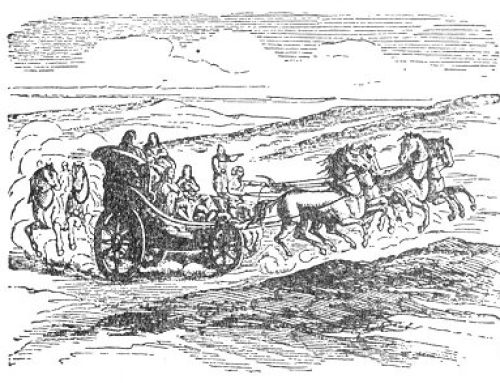
Poseidon, or Neptune, is represented in Greek mythology as a sea-god; but he
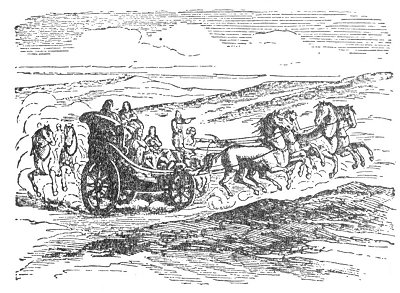
is figured as standing in a war-chariot drawn by horses. The association of the
horse (a land animal) with a sea-god is inexplicable, except with the light given
by Plato. Poseidon was a sea-god because he ruled over a great land in the sea,
and was the national god of a maritime people; be is associated with horses, because
in Atlantis the horse was first domesticated; and, as Plato shows, the Atlanteans
had great race-courses for the development of speed in horses; and Poseidon is
represented as standing in a war-chariot, because doubtless wheeled vehicles were
first invented by the same people who tamed the horse; and they transmitted these
war-chariots to their descendants from Egypt to Britain. We know that horses were
the favorite objects chosen for sacrifice to Poseidon by the nations of antiquity
within the Historical Period; they were killed, and cast into the sea from high
precipices. The religious horse-feasts of the pagan Scandinavians were a survival
of this Poseidon-worship, which once prevailed along all the coasts of Europe;
they continued until the conversion of the people to Christianity, and were then
suppressed by the Church with great difficulty.
We find in Plato’s narrative the names of some of the Phnician deities among
the kings of Atlantis. Where did the Greek, Plato, get these names if the story
is a fable?
Does Plato, in speaking of “the fruits having a hard rind, affording drinks
and meats and ointments,” refer to the cocoa nut?
Again: Plato tells us that Atlantis abounded in both cold and hot springs.
How did he come to hit upon the hot springs if he was drawing a picture from his
imagination? It is a singular confirmation of his story that hot springs abound
in the Azores, which are the surviving fragments of Atlantis; and an experience
wider than that possessed by Plato has taught scientific men that hot springs
are a common feature of regions subject to volcanic convulsions.
Plato tells us, “The whole country was very lofty and precipitous on the side
of the sea, but the country immediately about and surrounding the city was a level
plain, itself surrounded by mountains which descended toward the sea.” One has
but to look at the profile of the “Dolphin’s Ridge,” as revealed by the deep-sea
soundings of the Challenger, given as the frontispiece to this volume, to see
that this is a faithful description of that precipitous elevation. “The surrounding
mountains,” which sheltered the plain from the north, are represented in the present
towering peaks of the Azores.
Plato tells us that the destruction of Atlantis filled the sea with mud, and
interfered with navigation. For thousands of years the ancients believed the Atlantic
Ocean to be “a muddy, shallow, dark, and misty sea, Mare tenebrosum.” (“Cosmos,”
vol. ii., p. 151.)
The three-pronged sceptre or trident of Poseidon reappears constantly in ancient
history. We find it in the hands of Hindoo gods, and at the base of all the religious
beliefs of antiquity.
“Among the numerals the sacred three has ever been considered the mark of perfection,
and was therefore exclusively ascribed to the Supreme Deity, or to its earthly
representative–a king, emperor, or any sovereign. For this reason triple emblems
of various shapes are found on the belts, neckties, or any encircling fixture,
as can be seen on the works of ancient art in Yucatan, Guatemala, Chiapas, Mexico,
etc., whenever the object has reference to divine supremacy.” (Dr. Arthur Schott,
“Smith. Rep.,” 1869, p. 391.)
We are reminded of the, “tiara,” and the “triple round of sovereignty.” In
the same manner the ten kingdoms of Atlantis are perpetuated in all the ancient
traditions.
“In the number given by the Bible for the Antediluvian patriarchs we have the
first instance of a striking agreement with the traditions of various nations.
Ten are mentioned in the Book of Genesis. Other nations, to whatever epoch they
carry back their ancestors, whether before or after the Deluge, whether the mythical
or historical character prevail, they are constant to this sacred number ten,
which some have vainly attempted to connect with the speculations of later religious
philosophers on the mystical value of numbers. In Chaldea, Berosus enumerates
ten Antediluvian kings whose fabulous reign extended to thousands of years. The
legends of the Iranian race commence with the. reign of ten Peisdadien (Poseidon?)
kings, ‘men of the ancient law, who lived on pure Homa (water of life)’ (nectar?),
‘and who preserved their sanctity.’ In India we meet with the nine Brahmadikas,
who, with Brahma, their founder, make ten, and who are called the Ten Petris,
or Fathers. The Chinese count ten emperors, partakers of the divine nature, before
the dawn of historical times. The Germans believed in the ten ancestors of Odin,
and the Arabs in the ten mythical kings of the Adites.” (Lenormant and Chevallier,
“Anc. Hist. of the East,” vol. i., p. 13.)
The story of Plato finds confirmation from other sources.
An extract preserved in Proclus, taken from a work now lost, which is quoted
by Boeckh in his commentary on Plato, mentions islands in the exterior sea, beyond
the Pillars of Hercules, and says it was known that in one of these islands “the
inhabitants preserved from their ancestors a remembrance of Atlantis, all extremely
large island, which for a long time held dominion over all the islands of the
Atlantic Ocean.”
ian, in his “Varia Historia” (book iii., chap. xviii.), tells us that Theopompus
(400 B.C.) related the particulars of an interview between Midas, King of Phrygia,
and Silenus, in which Silenus reported the existence of a great continent beyond
the Atlantic, “larger than Asia, Europe, and Libya together.” He stated that a
race of men called Meropes dwelt there, and had extensive cities. They were persuaded
that their country alone was a continent. Out of curiosity some of them crossed
the ocean and visited the Hyperboreans.
“The Gauls possessed traditions upon the subject of Atlantis which were collected
by the Roman historian Timagenes, who lived in the first century before Christ.
He represents that three distinct people dwelt in Gaul: 1. The indigenous population,
which I suppose to be Mongoloids, who had long dwelt in Europe; 2. The invaders
from a distant island, which I understand to be Atlantis; 3. The Aryan Gauls.”
(“Preadamites,” p. 380.)
Marcellus, in a work on the Ethiopians, speaks of seven islands lying in the
Atlantic Ocean–probably the Canaries–and the inhabitants of these islands, he
says, preserve the memory of a much greater island, Atlantis, “which had for a
long time exercised dominion over the smaller ones.” (Didot Mler, “Fragmenta
Historicorum Grorum,” vol. iv., p. 443.)
Diodorus Siculus relates that the Phnicians discovered “a large island in
the Atlantic Ocean, beyond the Pillars of Hercules, several days’ sail from the
coast of Africa. This island abounded in all manner of riches. The soil was exceedingly
fertile; the scenery was diversified by rivers, mountains, and forests. It was
the custom of the inhabitants to retire during the summer to magnificent country-houses,
which stood in the midst of beautiful gardens. Fish and game were found in great
abundance; the climate was delicious, and the trees bore fruit at all seasons
of the year.” Homer, Plutarch, and other ancient writers mention islands situated
in the Atlantic, “several thousand stadia from the Pillars of Hercules.” Silenus
tells Midas that there was another continent besides Europe, Asia, and Africa–“a
country where gold and silver are so plentiful that they are esteemed no more
than we esteem iron.” St. Clement, in his Epistle to the Corinthians, says that
there were other worlds beyond the ocean.
Attention may here be called to the extraordinary number of instances in which
allusion is made in the Old Testament to the “islands of the sea,” especially
in Isaiah and Ezekiel. What had an inland people, like the Jews, to do with seas
and islands? Did these references grow out of vague traditions linking their race
with “islands in the sea?”
The Orphic Argonaut sings of the division of the ancient Lyktonia into separate
islands. He says,” When the dark-haired Poseidon, in anger with Father Kronion,
struck Lyktonia with the golden trident.”
Plato states that the Egyptians told Solon that the destruction of Atlantis
occurred 9000 years before that date, to wit, about 9600 years before the Christian
era. This looks like an extraordinarily long period of time, but it must be remembered
that geologists claim that the remains of man found in the caves of Europe date
back 500,000 years; and the fossil Calaveras skull was found deep under the base
of Table Mountain, California, the whole mountain having been formed since the
man to whom it belonged lived and died.
“M. Oppert read an essay at the Brussels Congress to show, from the astronomical
observations of the Egyptians and Assyrians, that 11,542 years before our era
man existed on the earth at such a stage of civilization as to be able to take
note of astronomical phenomena, and to calculate with considerable accuracy the
length of the year. The Egyptians, says he, calculated by cycles of 1460 years–zodiacal
cycles, as they were called. Their year consisted of 365 days, which caused them
to lose one day in every four solar years, and, consequently, they would attain
their original starting-point again only after 1460 years (365 x 4). Therefore,
the zodiacal cycle ending in the year 139 of our era commenced in the year 1322
B.C. On the other hand, the Assyrian cycle was 1805 years, or 22,325 lunations.
An Assyrian cycle began 712 B.C. The Chaldeans state that between the Deluge and
their first historic dynasty there was a period of 39,180 years. Now, what means,
this number? It stands for 12 Egyptian zodiacal cycles plus 12 Assyrian
lunar cycles.
| 12 X 1460 = 17,520 | |
| = 39,180 | |
| 12 X 1805 = 21,660 |
“These two modes of calculating time are in agreement with each other, and
were known simultaneously to one people, the Chaldeans. Let us now build up the
series of both cycles, starting from our era, and the result will be as follows:
| Zodiacal Cycle. | Lunar Cycle. |
| 1,460 | 1,805 |
| 1,822 | 712 |
| _____ | _____ |
| 2,782 | 2,517 |
| 4,242 | 4,322 |
| 5,702 | 6,127 |
| 7,162 | 7,932 |
| 8,622 | 9,737 |
| 110,082 | 11,542 |
| 11,542 |
“At the year 11,542 B.C. the two cycles came together, and consequently they
had on that year their common origin in one and the same astronomical observation.”
That observation was probably made in Atlantis.
The wide divergence of languages which is found to exist among the Atlanteans
at the beginning of the Historical Period implies a vast lapse of time. The fact
that the nations of the Old World remembered so little of Atlantis, except the
colossal fact of its sudden and overwhelming destruction, would also seem to remove
that event into a remote past.
Herodotus tells us that he learned from the Egyptians that Hercules was one
of their most ancient deities, and that he was one of the twelve produced from
the eight gods, 17,000 years before the reign of Amasis.
In short, I fail to see why this story of Plato, told as history, derived from
the Egyptians, a people who, it is known, preserved most ancient records, and
who were able to trace their existence back to a vast antiquity, should have been
contemptuously set aside as a fable by Greeks, Romans, and the modern world. It
can only be because our predecessors, with their limited knowledge of the geological
history of the world, did not believe it possible that any large. part of the
earth’s surface could have been thus suddenly swallowed up by the sea.
Let us then first address ourselves to that question.

Leave A Comment