
ATLANTIS
THE ANTEDILUVIAN WORLD
by Ignatius Donnelly
[1882]
PART IV
THE MYTHOLOGIES OF THE OLD WORLD A RECOLLECTION OF ATLANTIS
CHAPTER III
THE GODS OF THE PHNICIANS ALSO KINGS OF ATLANTIS.
NOT alone were the gods of the Greeks the deified kings of Atlantis, but we
find that the mythology of the Phnicians was drawn from the same source.
For instance, we find in the Phnician cosmogony that the Titans (Rephaim)
derive their origin from the Phnician gods Agrus and Agrotus. This connects the
Phnicians with that island in the remote west, in the midst of ocean, where,
according to the Greeks, the Titans dwelt.
According to Sanchoniathon, Ouranos was the son of Autochthon, and, according
to Plato, Autochthon was one of the ten kings of Atlantis. He married his sister
Ge. He is the Uranos of the Greeks, who was the son of G (the earth), whom he
married. The Phnicians tell us, “Ouranos had by Ge four sons: Ilus (El), who
is called Chronos, and Betylus (Beth-El), and Dagon, which signifies bread-corn,
and Atlas (Tammuz?).” Here, again, we have the names of two other kings of Atlantis.
These four sons probably represented four races, the offspring of the earth. The
Greek Uranos was the father of Chronos, and the ancestor of Atlas. The Phnician
god Ouranos had a great many other wives: his wife Ge was jealous; they quarrelled,
and he attempted to kill the children he had by her. This is the legend which
the Greeks told of Zeus and Juno. In the Phnician mythology Chronos raised a
rebellion against Ouranos, and, after a great battle, dethroned him. In the Greek
legends it is Zeus who attacks and overthrows his father, Chronos. Ouranos had
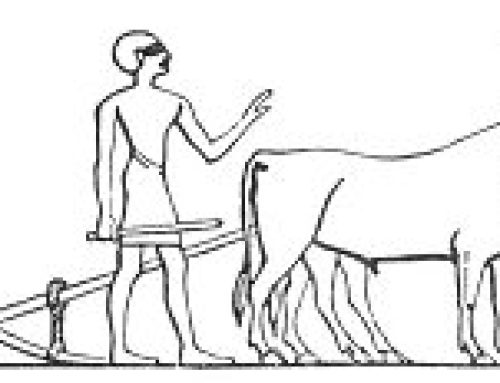
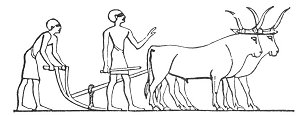
a daughter called Astarte (Ashtoreth), another called Rhea. “And Dagon, after
he had found out bread-corn and the plough, was called Zeus-Arotrius.”
We find also, in the Phnician legends, mention made of Poseidon, founder and
king of Atlantis.
Chronos gave Attica to his daughter Athena, as in the Greek legends. In a time
of plague be sacrificed his son to Ouranos, and “circumcised himself, and compelled
his allies to do the same thing.” It would thus appear that this singular rite,
practised as we have seen by the Atlantidof the Old and New Worlds, the Egyptians,
the Phnicians, the Hebrews, the Ethiopians, the Mexicans, and the red men of
America, dates back, as we might have expected, to Atlantis.
“Chronos visits the different regions of the habitable world.”
He gave Egypt as a kingdom to the god Taaut, who had invented the alphabet.
The Egyptians called him Thoth, and he was represented among them as “the god
of letters, the clerk of the under-world,” bearing a tablet, pen, and palm-branch.
This not only connects the Phnicians with Atlantis, but shows the relations
of Egyptian civilization to both Atlantis and the Phnicians.
There can be no doubt that the royal personages who formed the gods of Greece
were also the gods of the Phnicians. We have seen the Autochthon of Plato reappearing
in the Autochthon of the Phnicians; the Atlas of Plato in the Atlas of the Phnicians;
the Poseidon of Plato in the Poseidon of the Phnicians; while the kings Mestor
and Mneseus of Plato are probably the gods Misor and Amynus of the Phnicians.
Sanchoniathon tells us, after narrating all the discoveries by which the people
advanced to civilization, that the Cabiri set down their records of the past by
the command of the god Taaut, “and they delivered them to their successors and
to foreigners, of whom one was Isiris (Osiris), the inventor of the three letters,
the brother of Chua, who is called the first Phnician.” (Lenormant and Chevallier,
“Ancient History of the East,” vol. ii., p. 228.)
This would show that the first Phnician came long after this line of the kings
or gods, and that he was a foreigner, as compared with them; and, therefore, that
it could not have been the Phnicians proper who made the several inventions narrated
by Sanchoniathon, but some other race, from whom the Phnicians might have been
descended.
And in the delivery of their records to the foreigner Osiris, the god of Egypt,
we have another evidence that Egypt derived her civilization from Atlantis.
Max Mler says:
“The Semitic languages also are all varieties of one form of speech. Though
we do not know that primitive language from which the Semitic dialects diverged,
yet we know that at one time such language must have existed. . . . We cannot
derive Hebrew from Sanscrit, or Sanscrit from Hebrew; but we can well understand
bow both may have proceeded from one common source. They are both channels supplied
from one river, and they carry, though not always on the surface, floating materials
of language which challenge comparison, and have already yielded satisfactory
results to careful analyzers.” (“Outlines of Philosophy of History,” vol. i.,
p. 475.)
There was an ancient tradition among the Persians that the Phnicians migrated
from the shores of the Erythrn Sea, and this has been supposed to mean the Persian
Gulf; but there was a very old city of Erythia, in utter ruin in the time of Strabo,
which was built in some ancient age, long before the founding of Gades, near the
site of that town, on the Atlantic coast of Spain. May not this town of Erythia
have given its name to the adjacent sea? And this may have been the starting-point
of the Phnicians in their European migrations. It would even appear that there
was an island of Erythea. In the Greek mythology the tenth labor of Hercules consisted
in driving away the cattle of Geryon, who lived in the island of Erythea, “an
island somewhere in the remote west, beyond the Pillars of Hercules.” (Murray’s
“Mythology,” p. 257.) Hercules stole the cattle from this remote oceanic island,
and, returning drove them “through Iberia, Gaul, over the Alps, and through Italy.”
(Ibid.) It is probable that a people emigrating from the Erythrn Sea, that is,
from the Atlantic, first gave their name to a town on the coast of Spain, and
at a later date to the Persian Gulf–as we have seen the name of York carried
from England to the banks of the Hudson, and then to the Arctic Circle.
The builders of the Central American cities are reported to have been a bearded
race. The Phnicians, in common with the Indians, practised human sacrifices to
a great extent; they worshipped fire and water, adopted the names of the animals
whose skins they wore–that is to say, they had the totemic system–telegraphed
by means of fires, poisoned their arrows, offered peace before beginning battle,
and used drums. (Bancroft’s “Native Races,” vol. v., p. 77.)
The extent of country covered by the commerce of the Phnicians represents
to some degree the area of the old Atlantean Empire. Their colonies and trading-posts
extended east and west from the shores of the Black Sea, through the Mediterranean
to the west coast of Africa and of Spain, and around to Ireland and England; while
from north to south they ranged from the Baltic to the Persian Gulf. They touched
every point where civilization in later ages made its appearance. Strabo estimated
that they had three hundred cities along the west coast of Africa. When Columbus
sailed to discover a new world, or re-discover an old one, he took his departure
from a Phnician seaport, founded by that great race two thousand five hundred
years previously. This Atlantean sailor, with his Phnician features, sailing
from an Atlantean port, simply re-opened the path of commerce and colonization
which had been closed when Plato’s island sunk in the sea. And it is a curious
fact that Columbus had the antediluvian world in his mind’s eye even then, for
when he reached the mouth of the Orinoco he thought it was the river Gihon, that
flowed out of Paradise, and he wrote home to Spain, “There are here great indications
suggesting the proximity of the earthly Paradise, for not only does it correspond
in mathematical position with the opinions of the holy and learned theologians,
but all other signs concur to make it probable.”
Sanchoniathon claims that the learning of Egypt, Greece, and Jud was derived
from the Phnicians. It would appear probable that, while other races represent
the conquests or colonizations of Atlantis, the Phnicians succeeded to their
arts, sciences, and especially their commercial supremacy; and hence the close
resemblances which we have found to exist between the Hebrews, a branch of the
Phnician stock, and the people of America.
Upon the Syrian sea the people live
Who style themselves Phnicians. . . .
These were the first great founders of the world–
Founders of cities and of mighty states–
Who showed a path through seas before unknown.
In the first ages, when the sons of men
Knew not which way to turn them, they assigned
To each his first department; they bestowed
Of land a portion and of sea a lot,
And sent each wandering tribe far off to share
A different soil and climate. Hence arose
The great diversity, so plainly seen,
‘Mid nations widely severed.
Dyonysius of Susiana, A.D. 3,

Leave A Comment